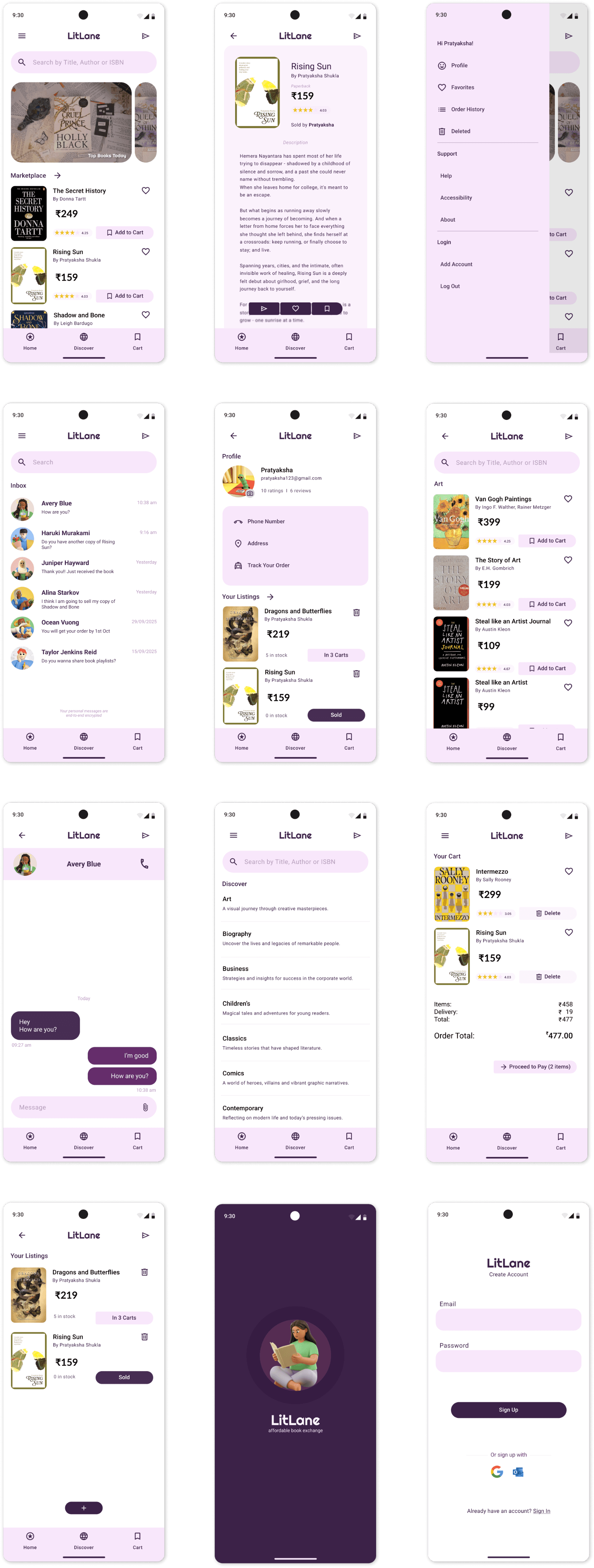
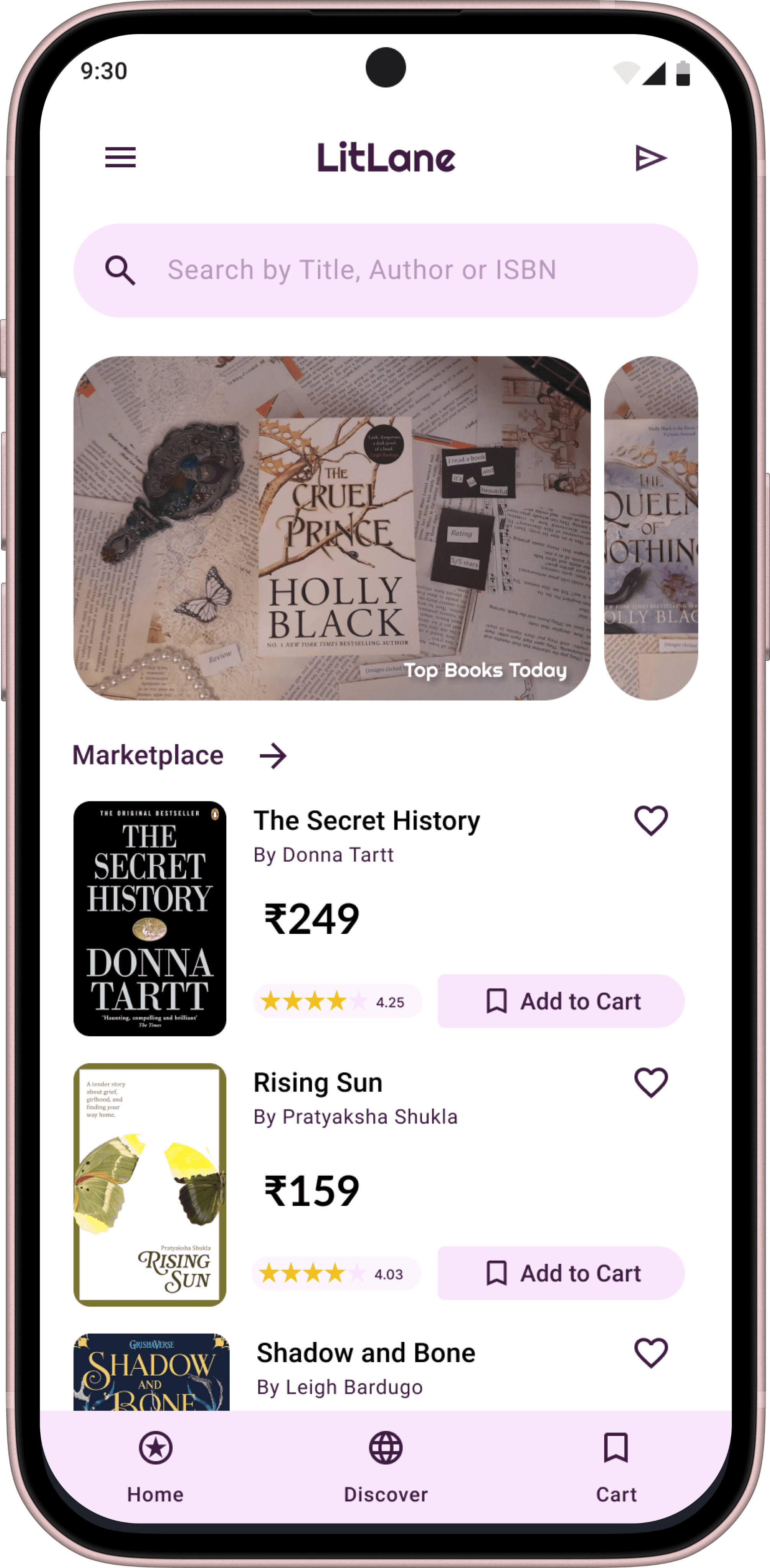
LitLane is a peer-to-peer mobile marketplace built to make books affordable, discoverable, and safe to trade across Indian communities.
LitLane
Problem Statement
Objective
Indian readers lack a dedicated, secure community platform to overcome high costs and accessibility gaps in the secondhand and niche book market.
Create a secure, community-focused C2C marketplace for localized book trading and lending that prioritizes trust, affordability, and sustainable reuse.
Process
Secondary Research
Primary Research
Competitive Analysis
User Persona
Task Mapping
Feature Definition
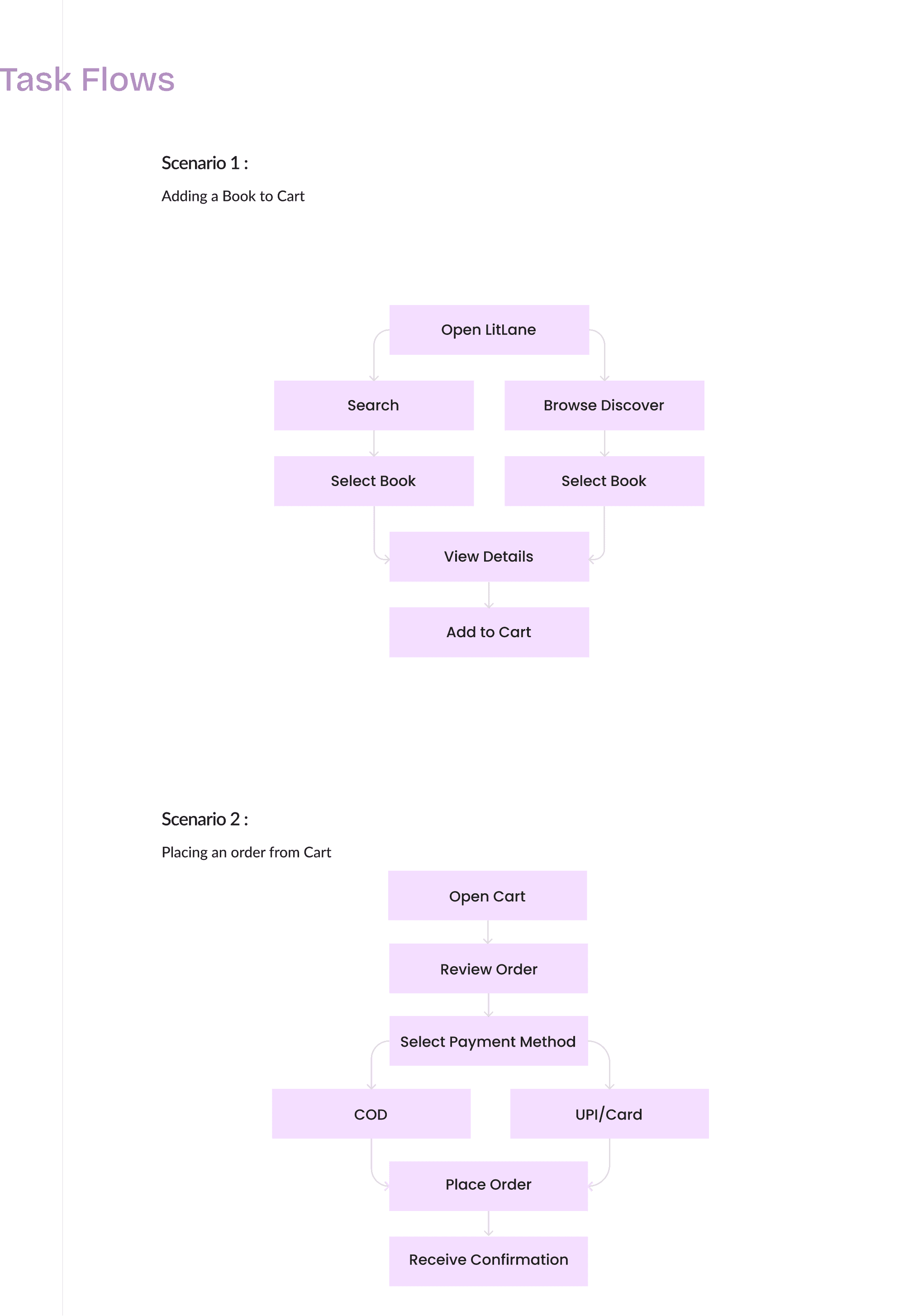
Task Flows
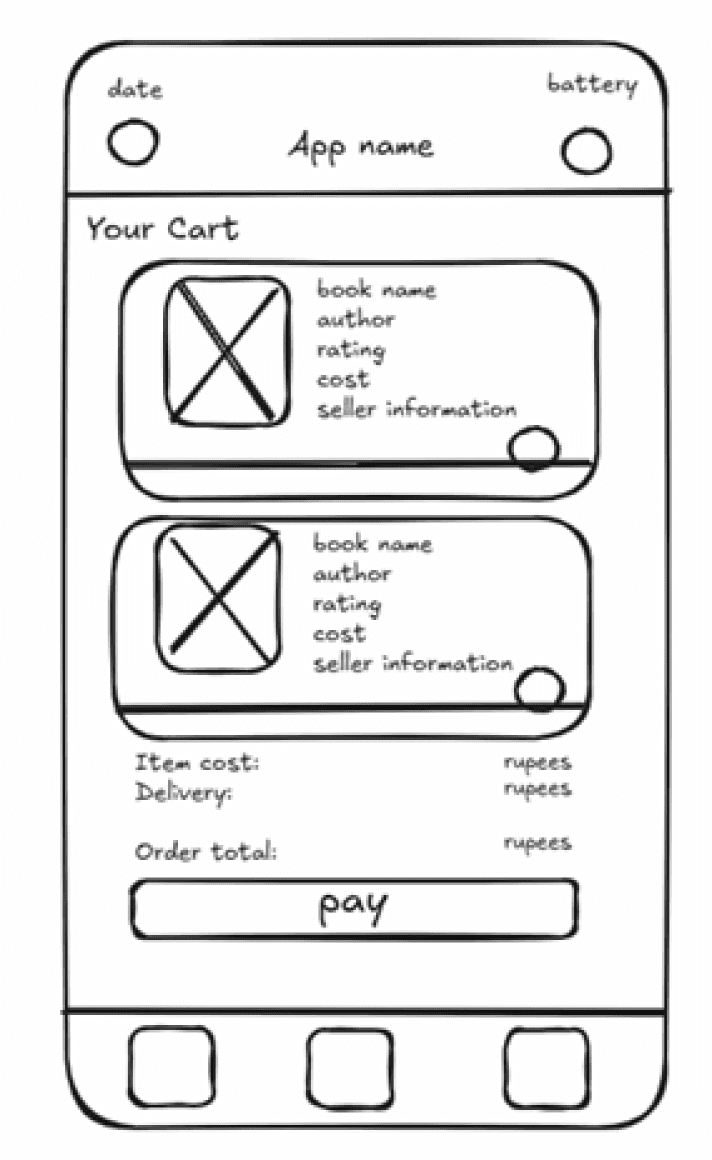
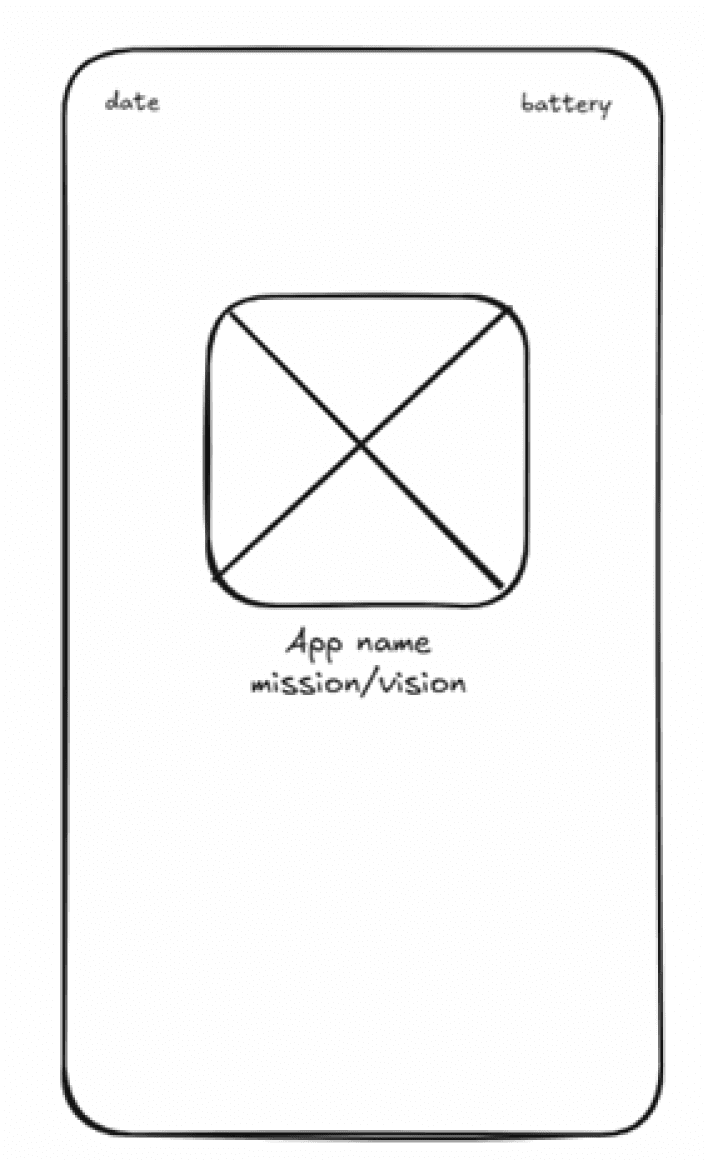
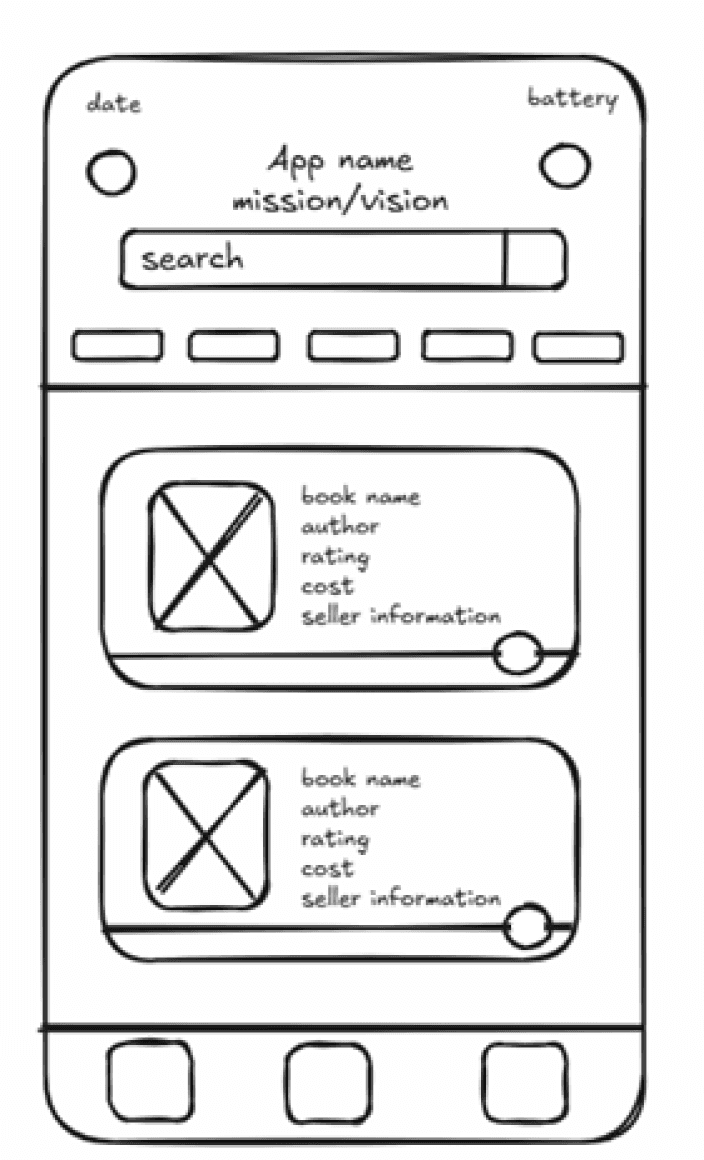
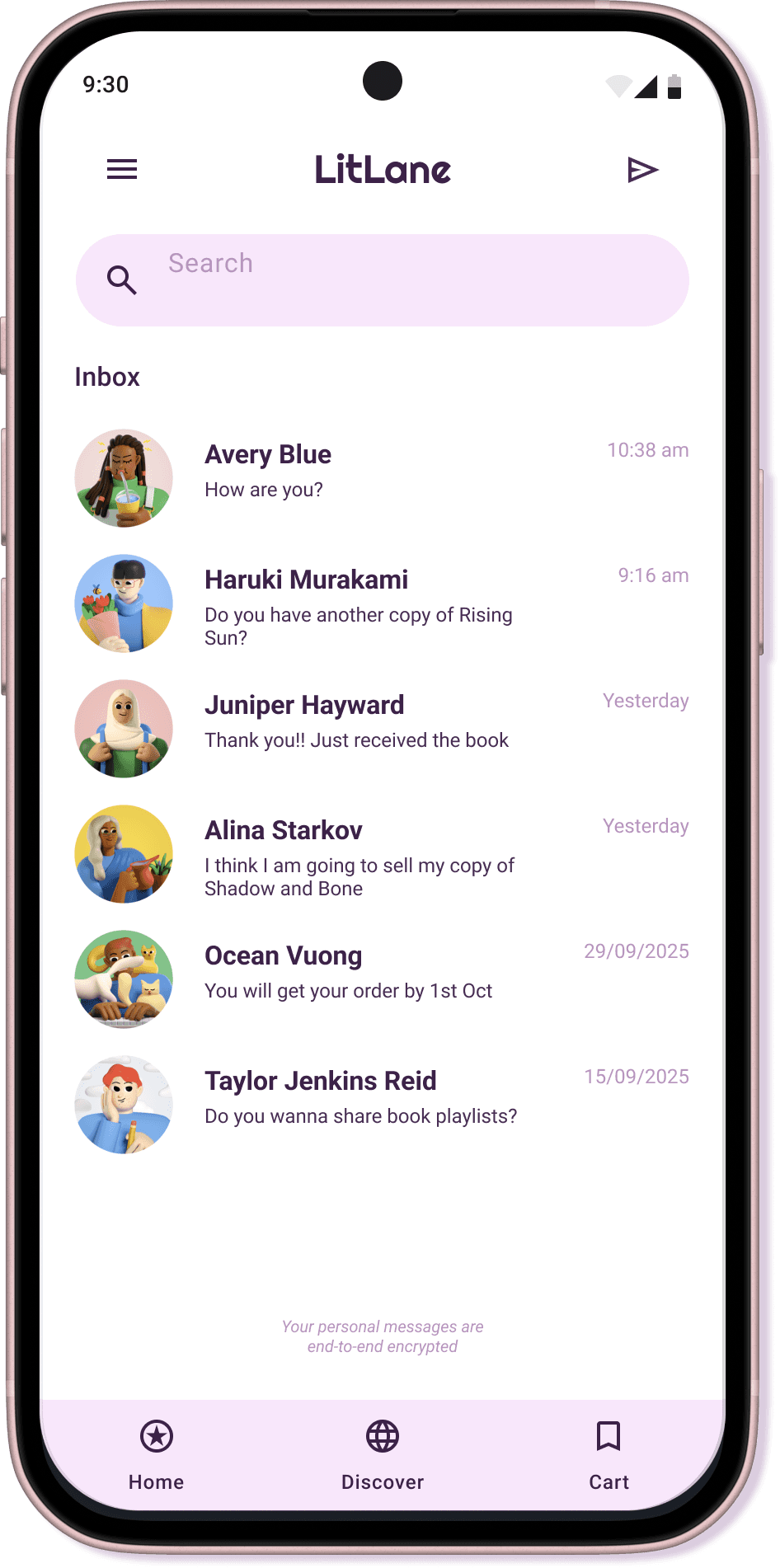
Wireframing & UI Design
Task Mapping
Feature Definition
Wireframing & UI Design
Thank You!!
Primary User Goals:
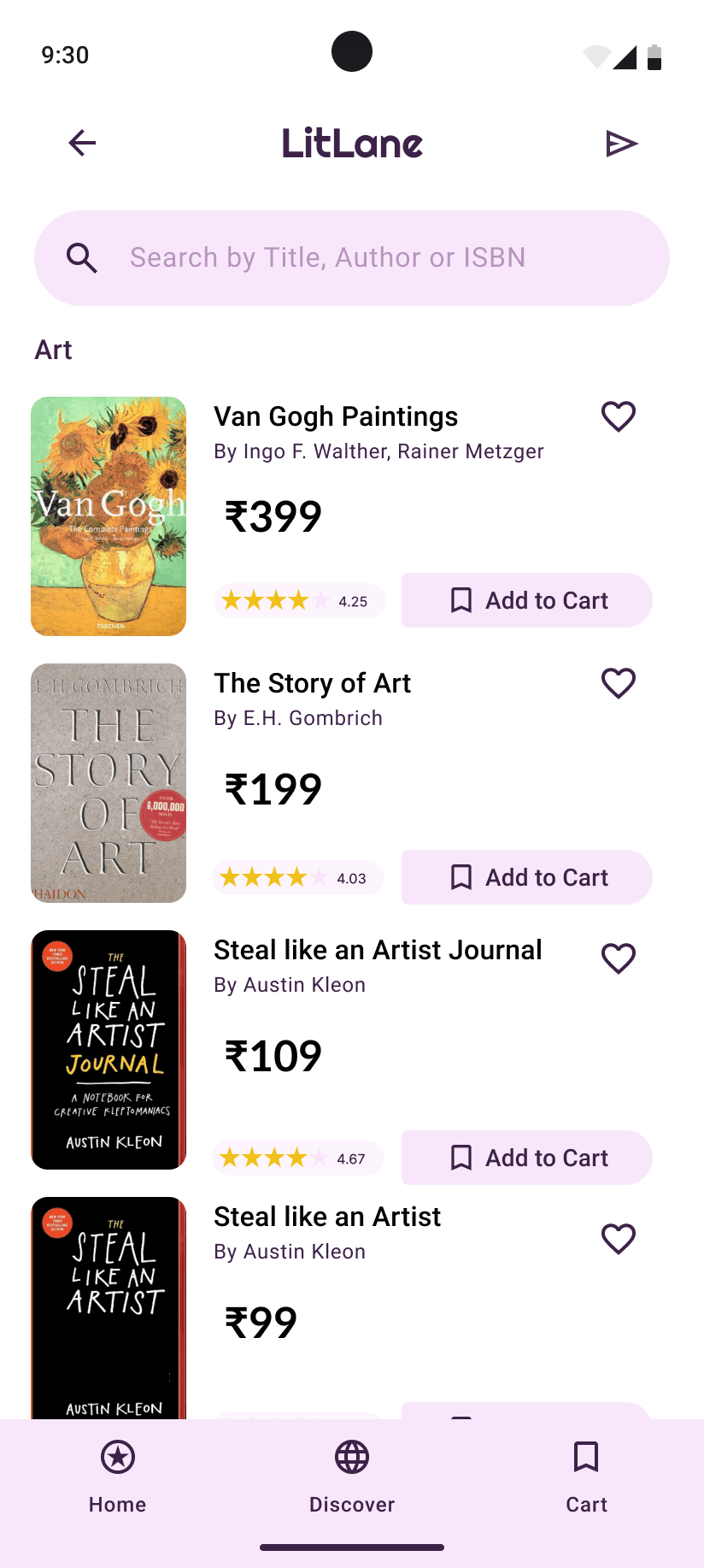
Find affordable books
Sell unused books
Exchange locally
Ensure safe transactions
Supporting Tasks:
Filter by condition
View ratings
Chat with seller
Choose payment method
Secondary Research
Primary Research
To understand real user behavior, in-depth interviews were conducted with 15+ participants, including students, collectors, casual readers, and academic buyers. The research explored their book purchasing habits, platform preferences, trust concerns, and openness toward peer-to-peer exchanges.
Findings revealed:
The Trust Gap: Reliability is the primary barrier to peer-to-peer adoption.
The Quality Paradox: Users want the savings of used books but fear "wrong editions" or hidden damage.
Emotional Value: There is a unique market segment that prefers the "history" of a used book over a brand-new copy.
Competitive Analysis
User Persona
India is one of the largest English-language book markets globally.
Students (18–24) form a major purchasing segment.
Instagram thrift stores and WhatsApp groups are increasingly popular for peer exchanges.
Secondhand book markets like Daryaganj (Delhi) thrive due to affordability.
Price sensitivity is high: discounts heavily influence purchasing decisions.
Verified profile system with ratings builds credibility and reduces hesitation in peer exchanges.
Structured condition indicators ensure transparency & align expectations before purchase.
Community-building and reporting mechanisms maintain platform integrity while fostering long-term engagement.
Localized exchange radius & flexible payment options minimize delivery risks & increase user comfort
Platform
Primary Model
Strengths
The Gap
BookChor
B2C (Business to Consumer)
Curated quality; organized secondhand sales.
Users can't sell or exchange directly with each other.
OLX / Quikr
General C2C Marketplace
High traffic; direct local selling.
Hard to find specific editions; high risk of scams/spam.
Instagram Thrift Stores
Social Selling
Aesthetic appeal; rare/curated finds.
No buyer protection; manual payment/tracking is risky.
WhatsApp Groups
Community-driven
High trust within small circles; instant.
Hard to search; no safety protocols; scales poorly.



Quality Collector
Infrequent Buyer
Budget-conscious Buyer
It bridges the gap between informal peer exchanges and large-scale e-commerce platforms by combining trust, affordability, and local connectivity into one structured ecosystem.
© 2026 Pratyaksha Shukla — crafting stories in pixels and prose